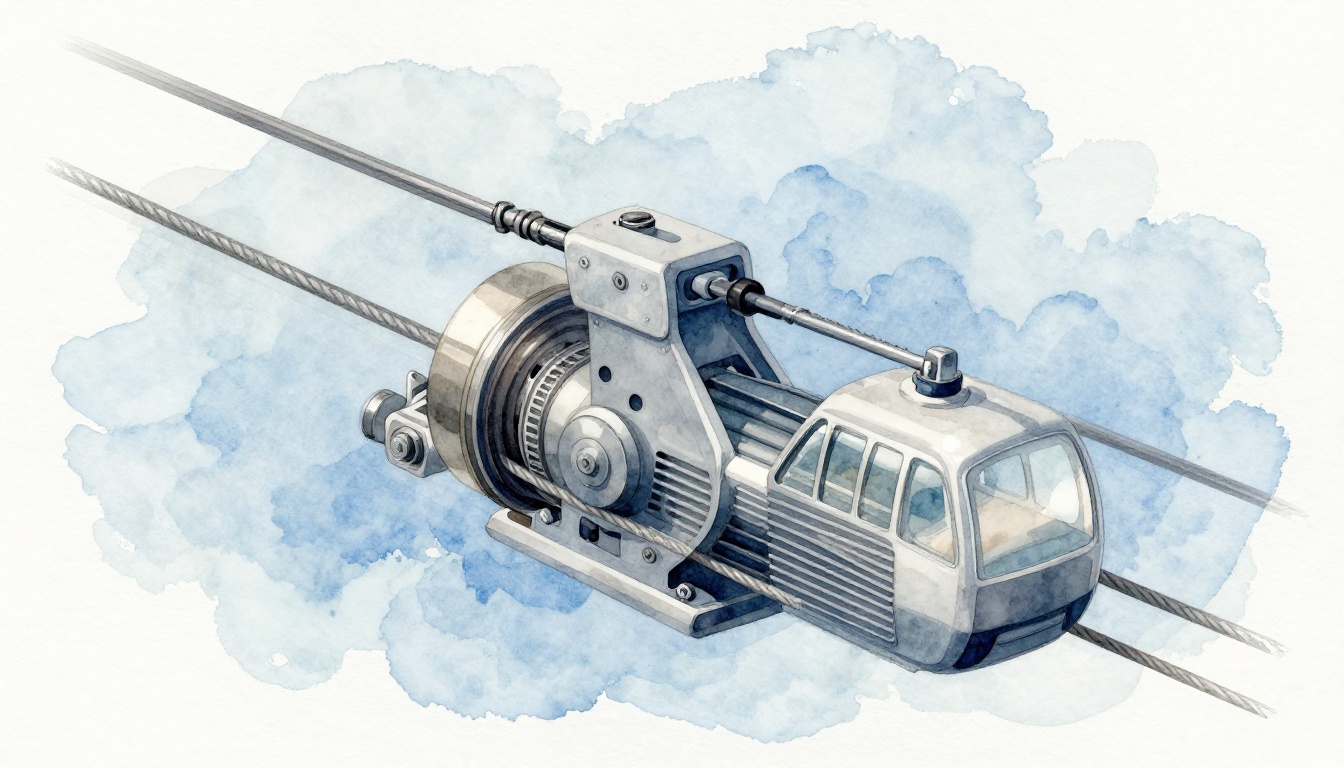
The moment you step into an elevator, you expect one thing. It glides up smoothly, with no jolt. That “magic” comes from how elevator motors and cables function together in a traction system, plus counterweights and safety backups.
You might not think about the details when you press a button. Still, the same teamwork is happening every trip. A motor spins the right motion, cables carry the load, and safety parts stand by if anything goes wrong.
In this guide, you’ll learn the parts in plain language. First, we’ll cover motor types and why they matter. Next, we’ll break down cable ropes and what “grip” really means. Then we’ll connect everything through traction, counterweights, and fail-safe safety gear. Finally, we’ll end with practical maintenance tips and what’s changing in March 2026.
Elevator Motors 101: The Powerhouses That Drive the Lift
An elevator motor turns electrical power into motion. In most traction elevators, that motion feeds a rotating wheel called a sheave. The sheave then pulls on the cables through friction.
Think of the motor as the “engine,” and the sheave as the “driving wheel.” Without that spin, the cables have nothing to grip.
Modern elevator drive systems focus on smooth start and stop. You also get tighter speed control through motor drive and control upgrades. If you want a deeper look at how drives and controls work, see Motor Drive and Control on Elevator World.
Here are the main elevator motor types you’ll hear about:
| Motor type | What it’s good at | Typical trade-off |
|---|---|---|
| AC (alternating current) | Reliable operation in modern systems | Speed control needs the right controls |
| DC (direct current) | Strong torque for starts | More wear, often higher maintenance needs |
| Geared AC/DC with gearbox | More lift force at mid-range speeds | Extra parts add wear over time |
| Gearless direct drive | Smooth, quiet high-rise performance | Bigger motor, more complex setup |

AC and DC Motors: Choosing the Right Power Source
AC motors dominate in today’s elevators. That’s mostly because they’re tough, widely supported, and simple to run with modern controllers. With good controls, AC systems can ramp speed smoothly and keep ride quality consistent.
DC motors get used in some older systems and some special designs. DC can deliver strong torque right away, so the elevator starts with force when needed. However, DC setups often involve more maintenance because of wear tied to speed control components and brushes in some designs.
Today, many modernization projects swap older motor and controller parts for newer AC drive solutions. As a result, you often see calmer starts, more stable speed, and easier parts sourcing.
If you’re comparing systems, focus on how the motor works with the drive electronics. The motor alone doesn’t decide the ride feel. Controls and feedback sensors do. They help the motor “know” how fast the car should move, then adjust as conditions change.
Geared vs Gearless: Matching Motor to Building Height
A geared motor uses a gearbox between the motor and the sheave. The gearbox reduces speed and increases lift force. In everyday terms, it’s like using the lower gears on a bike. You spin differently, but you can climb with more control.
Gearless systems connect the motor directly to the sheave. There’s no gearbox to step down speed. So the system can run smoothly at higher speeds and often with less mechanical noise.
Safety matters here too. Some geared setups use worm gears that resist back-driving. In plain language, that helps keep motion from slipping the wrong way.
For a side-by-side comparison of design choices, Geared vs. Gearless Lift Machine: Which to Choose? explains how the trade-offs show up in real buildings.
Elevator Cables Unpacked: The Strong Links That Hold Everything
If the motor is the engine, the cables are the strength. Elevator cables are made from multiple twisted steel wires, usually formed into several ropes that run in grooves on the sheave.
Most traction elevators use redundancy. That means you often see 4 to 8 cables (ropes), and each rope is designed so it can support the rated load on its own. This doesn’t mean it’s safe to ignore a rope problem. It just means the design gives you built-in margin.
Cables also work in pairs with the counterweight. When the car goes up, the counterweight tends to go down. Because the counterweight helps carry the load, the motor doesn’t need to do all the work.
The sheave doesn’t grab cables by “picking them up” like a hand. Instead, the sheave has grooves. Those grooves guide the rope and help the traction surface grip securely.
A good analogy is climbing rope. If the rope sits on a smooth surface, it can slip. Add grooves and traction, and it grips better. That grip is what turns motor rotation into steady lift motion.

From Steel Ropes to Synthetics: Picking Durable Options
Steel ropes still lead in most elevator installs. Steel gives high strength and predictable behavior under load. Many systems also use coated steel to improve resistance to wear and corrosion.
In recent years, synthetic materials have gained attention. Polymeric cables can reduce weight and may offer benefits like lower energy use or easier handling during installation. In some setups, synthetics can also help with noise and vibration because of material properties.
The best choice depends on the building, the expected loads, and the system design. In other words, you don’t pick “steel or synthetic” like it’s a random preference. You match the cable to the elevator’s traction and safety requirements.
If you want context on the trade-offs, check Steel Wire Rope vs. Synthetic Rope: Which Is Right for Your Lifting System?. It compares strength, wear, and selection factors that engineers consider.
The Traction System: How Motors Spin Cables into Smooth Motion
Now here’s the key part: the motor and cables function together through traction. The motor turns the sheave. The sheave’s grooves press against the cables. That friction creates a pull force.
When the control system commands “up,” the motor spins one way. That causes the sheave to pull the rope, lifting the car. At the same time, the counterweight moves down, driven by the same cable set.
Most traction elevators use roping to get the right balance. A common setup pairs the car and counterweight so the counterweight carries much of the car’s weight. Because of that balance, the motor mainly handles the difference between passenger load and counterweight load.
A simple way to picture it: imagine you’re pulling a bucket from a well with a rope and pulley. You don’t pull the bucket alone. The pulley setup helps distribute the effort. Elevators do something similar with counterweights and cable routing.
Some modern designs also use different drive layouts. But the basic idea stays the same. Motor turns, sheave grips, cables carry, counterweight balances.

If you like a plain walkthrough of how traction systems work in real buildings, see How Do Traction Elevators Work?.
Sheave Grip and Friction: The Heart of Movement
The sheave is the link between “spinning” and “lifting.” Its grooves help the cable sit in place. Then traction friction resists slip.
As the motor spins faster, the sheave turns and cables move. Because the control system monitors speed, it adjusts motor output to match the command.
If traction grip drops due to worn sheaves, contaminated grooves, or damaged ropes, the elevator can’t transfer force reliably. That’s why routine inspections target sheave condition and rope wear patterns.
Bottom line: traction means friction doing real work, not just power sending motion.
Counterweights: Balancing Act for Energy Savings
Counterweights reduce the motor’s job. In many systems, the counterweight equals about the weight of an empty car plus a portion of passenger load.
That balance means the motor only needs to overcome the “difference.” When the car is light, the motor does less power work as the counterweight helps. When the car is heavy, the motor pushes the extra weight.
So, counterweights improve energy use and ride stability. They also reduce stress on the motor and drive components.
Safety First: Brakes and Governors That Catch Any Problem
Traction systems rely on a strong connection between motor, sheave, and cables. Still, elevators also need multiple safety layers. That way, one failure can’t turn into a disaster.
Most traction elevators use:
- Machine brake(s) for stopping when power is off
- Car safety brakes that clamp onto the rails if the car falls or overspeeds
- Overspeed governor that triggers the safety brakes when speed exceeds a set limit
- Redundant suspension ropes to maintain support even with a problem
These systems are tested under safety codes. In the US, the safety code process is tied to ASME A17.1 updates. For a current summary of code revisions, read ASME A17.1-2025: Safety Code for Elevators and Escalators.

Gotcha to remember: brakes are not “optional comfort.” They’re a core part of the fail-safe design.
From Governors to Brakes: Layers of Protection
Overspeed governors sit near the top of the shaft area. They use a small sensing mechanism tied to speed. If the elevator runs too fast, the governor triggers a trip action.
Next, the system engages the car safety brakes. These brakes use mechanical force to grip the guide rails. Once the car is clamped, the descent stops.
Meanwhile, the machine brake helps control normal stopping. Many machine brakes are spring-applied and electrically released. That means if power fails, springs push the brake into action.
So even if the motor stops unexpectedly, the design expects you to stop safely.
Keep It Running: Maintenance Tips and 2026 Innovations
Even the best motor and cable system needs care. Small issues grow when you ignore them. Worn rope strands, dirty sheave grooves, or brake wear can change traction and stopping performance.
A practical maintenance mindset includes frequent checks and targeted repairs. Facility teams often focus on:
- Rope and sheave inspection for wear, rust, and fraying
- Brake checks to confirm proper clamp action
- Governor and safety device testing on scheduled intervals
- Rail cleaning (dust and debris can affect brake performance)
- Lubrication and alignment work for geared components
In addition, modern control tech helps reduce strain. Better motor drives can manage acceleration and deceleration more gently. That reduces shock loads on ropes and reduces stress on gearbox parts.
As for March 2026 updates, upgrades often emphasize efficiency and smarter monitoring. Regenerative drives can send braking energy back toward the building power system. That lowers waste heat and energy use. Also, many systems now support better remote monitoring, so teams can spot trends before they cause shutdowns.

If you own or manage a building, don’t just rely on “it seems fine.” Ask what’s been inspected recently. Find out when brakes and governors were last tested. Then confirm your maintenance schedule matches your usage levels.
Conclusion: The Teamwork Behind Every Smooth Elevator Ride
That smooth glide you feel comes from a tight chain of teamwork. The motor spins, the sheave grips, and the elevator motors and cables function together through friction-driven traction. Counterweights handle much of the load, so the motor doesn’t fight gravity alone.
Safety parts close the loop. Brakes and governors provide backup actions if speed, control, or support fails. With the right maintenance, the system stays trustworthy year after year.
If you want a simple next step, share this with someone curious about how elevators work. Then take a moment to notice the ride quality in your building. It’s a sign that the motor-cable system is doing its job, correctly and safely.