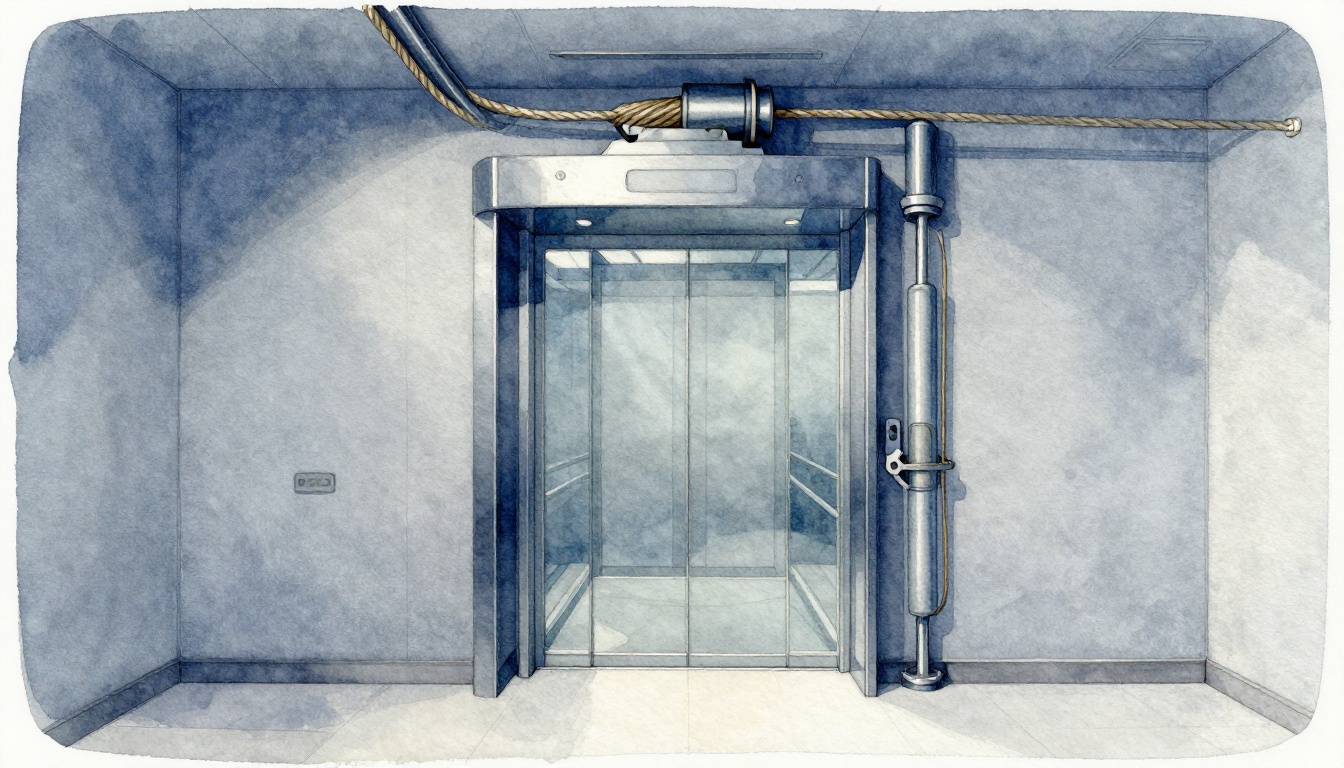
Billions of people step into elevators every day, then move on with their routine, with barely a thought to the machinery inside. Still, when something starts to feel “off,” it’s usually one of the main parts of an elevator system that needs attention. If you’re a homeowner, building manager, or just curious, knowing the elevator components helps you spot small problems early and stay safer.
Elevators may look simple from the outside, but they depend on a clear setup working together. You’ll see how elevator types like traction and hydraulic differ, and which parts they share. From there, we’ll break down the elevator car, doors, hoistway equipment, and the key safety systems that protect riders.
Next, you’ll learn how the power system, controls, and safety features fit into the full elevator system, and why each part matters when you troubleshoot or plan maintenance. After that, we’ll also touch on what 2026 is bringing for energy savings and smoother performance.
Traction vs. Hydraulic: The Two Big Types of Elevator Systems
Ever wonder why some buildings hum quietly, while others feel more like a steady “push” up the shaft? Most elevators fall into two main drive types: traction and hydraulic. They both move an elevator car up and down, but they do it in very different ways, so the machine choices and space needs also differ.
The short version is simple. Traction elevators pull the car with cables and balance it with a counterweight, which is why they fit taller buildings well. Hydraulic elevators lift with oil pressure through a piston, which is why they often work best in low-rise buildings.
How Traction Elevators Pull Their Weight
Traction elevators use steel cables that run over a top pulley (called a sheave) and connect to the elevator car. Because the cables go over the sheave, the system can “pull” the car upward smoothly, instead of relying on brute force.
Just as important, traction elevators also use a counterweight. In plain terms, the counterweight acts like a balancing weight on the other side of the cables. It offsets much of the car’s weight, so the motor does less work during everyday rides.

Modern traction systems also often use gearless motors, which run quietly and efficiently at higher speeds. Meanwhile, VFDs (variable frequency drives) fine-tune motor speed. That means smoother starts, steadier travel, and less wasted energy when demand changes.
In 2026 models, traction efficiency gets a big upgrade. Many systems use regenerative drives, which send power back to the building when the car slows down or travels down with load. The result is less electricity wasted as heat. If you want a helpful overview of how these systems differ by use case, see traction vs. hydraulic elevator comparisons.
Why Hydraulic Elevators Shine in Smaller Spaces
Hydraulic elevators work like a power jack. A pump pushes hydraulic oil through a line to a cylinder, and that oil pushes a piston. As the piston rises, it lifts the elevator car. When the car goes down, the system releases oil in a controlled way so the ride stays stable.
This setup is why hydraulic elevators often fit 2 to 7 floors so well. The machinery can be compact, and many installations avoid the space demands of full traction gear systems. Also, in many buildings today, traction projects may go machine-room-less (MRL), while hydraulic designs still offer a simpler footprint for shorter travel.

Yes, hydraulic elevators can feel slower than traction, especially at higher floors. However, they’re also known for reliable operation on shorter runs. That reliability matters when elevators serve daily schedules, not just peak bursts.
In 2026, eco-upgrades are changing the story. Builders and modernization teams can reduce oil use by updating the power unit, improving controls, and cutting how often the pump runs. For example, efficient pump motors and better valve control reduce wasted motion and help keep oil working longer. If you’re comparing systems for residential or small commercial installs, this guide on hydraulic vs. traction elevator benefits offers a clear starting point.
The Ride Box and Balance: Elevator Car and Counterweights
An elevator ride feels light, even when the cab is not. That smooth feel comes from two parts working like a team: the ride box (the elevator car) and balance (counterweights on the cable system). When they match up, the motor does less work, the ride feels steady, and the whole system wastes less energy.
Inside the Elevator Car: Your Safe Cabin
Step into the elevator car, and you’ll notice how the space is built for control and safety, not comfort alone. The interior typically includes two-way emergency communication (an intercom), bright call buttons, and clear lighting so passengers can see where they are. Some cars also add a handrail for stability, plus seats in certain settings like medical buildings or assisted living.
Now look at the ride itself. Behind the wall panels and door edges, guide rails help the car stay on track. In most systems, the car rides on guide shoes or rollers that press against the rails. Because of that contact, the car resists sideways sway. It’s similar to how shopping carts glide straight on rails inside a store aisle.
Here’s a simple way to picture the motion. The car moves up and down in the hoistway, but the guides keep the car aligned with the door tracks. So even when the cab starts, stops, or changes speed, the passenger feels less shake. That matters most in high-rise buildings, where small vibration can feel bigger.
The hoistway details support this stability. At the bottom, you have the pit, a protected space below the lowest stop. Above the car travel area, there’s overhead clearance so components have room to work safely. Throughout the travel, the car follows the rails the same way a train follows track.
If you want a deeper look at how roller guide systems help reduce noise and vibration, see elevator roller guides and smooth operation.

Counterweights: The Unsung Heroes of Efficiency
Counterweights rarely get noticed, yet they shape every ride. In a traction elevator, the counterweight is a heavy mass that moves opposite the car. Cables connect the two, running over a top sheave (pulley) so the system can lift one side while the other side lowers.
Think of it like a seesaw. If one side is heavier, the balance tilts. The elevator system chooses a counterweight weight that matches the car’s mass, usually close to the car plus about half the passenger load. Because of that balance, the motor often only has to handle the “difference,” not the full weight of the cab every trip.
This balance shows up as energy savings. When the counterweight carries much of the load, the motor does less climbing on the upward runs. On the downward runs, the motor may still control motion, but the counterbalance reduces how hard the system must push against gravity.
A quick, simple mental model helps. Without counterweights, the motor would “own” the full job, every time. With counterweights, the motor becomes more like a driver who trims speed, not someone who must lift the whole car alone.
Modern efficiency gains also come from the rest of the traction package. For example, regenerative drives can recycle energy during braking, sending some power back instead of turning it all into heat. The California Energy Design Assistance (CEDA) guide on high-efficiency elevators explains why energy control matters across the whole system, not just the motor.
As a result, the counterweight helps in several ways at once:
- Lower motor strain because the system stays closer to balance
- Less wear on parts that handle starts and stops
- Better energy use because the elevator does less “extra work”
In many designs, this combination can cut energy use dramatically compared to older setups, especially in busy buildings with lots of travel.

Power and Precision: Motors, Cables, and Guide Rails
An elevator feels “simple” from the lobby, but the ride depends on tight teamwork. The motor provides the force, the cables carry it, and the guide rails keep everything aligned. When one part drifts off spec, the whole system pays the price in noise, wear, or ride quality.
Think of the cables like fishing line, except they’re built from steel and engineered to stretch your imagination. They don’t just pull. They also transfer motion in a controlled path, so the car moves smoothly and predictably.
Cables and Sheaves: The Lifting Lifelines
Most traction elevators use 4 to 8 steel ropes (the exact count depends on car size and design). Each rope loops through the system so the traction sheave at the top can grip and guide the cables as the car moves.
In other words, the motor doesn’t “lift the car” directly. It spins the sheave, and the sheave turns that spinning into upward pull. Meanwhile, the counterweight balances the load, which reduces how hard the motor must work each trip.
Safety here is not a single feature. It’s a set of redundancies built into the design:
- Multiple ropes spread the load, so wear or damage doesn’t concentrate in one place.
- Proper rope lay and routing helps keep tension even across ropes.
- Sheave groove fit matters because cable slippage or uneven contact can cause rapid wear.
Cable strength and maintenance also follow strict replacement ideas. For example, replacement criteria tied to broken wire distribution show up in industry guidance, such as wire rope replacement criteria from Prysmian. The point is simple: don’t wait for “failure.” Track condition early.

Motors and Drives: The Muscle Behind the Motion
At the top of a traction system, you’ll find the drive unit. In modern traction elevators, many systems use gearless motors, also called direct-drive traction. Because they connect straight to the traction wheel (instead of using a gearbox), they can run quieter and reduce mechanical losses.
Next, you’ll often see a VFD (variable frequency drive) paired with that motor. The VFD controls how fast the motor spins. So the car starts smoothly, accelerates in a controlled way, and then slows down without harsh jolts. That control also reduces shock loads on the rope, sheave, and guide rails.
Guide rails act like metal tracks that prevent wobble. As the car moves, rollers and shoes press against the rails and keep the cab steady. So the motor provides forward motion, and the rails provide straight-line discipline.
Recent drive progress also aims at better durability. In 2026-focused modernization work, you’ll see stronger thermal management, tighter control tuning, and more robust components that handle repeated starts and stops. Even so, the best results come from matching the right drive to the right elevator load profile.
If you want a real-world example of how VFDs fit hydraulic systems, Danfoss highlights energy and noise benefits for VSD portfolios in variable speed drive updates from Danfoss.

Brains, Doors, and Safety Nets: Controllers, Signals, and Protections
An elevator only feels effortless because three layers work in sync. First, a smart controller makes decisions fast. Next, doors and sensors prevent injuries at the threshold. Finally, safety systems act like a net, ready to catch you if anything goes wrong.

The Controller: Directing Every Move
Think of the controller as the elevator’s brain. It reads inputs from buttons, position sensors, door status switches, and speed feedback. Then it commands the motor, door operator, and brake system in the right order.
Modern elevators rely on microprocessors and PLCs (programmable logic controllers). These handle logic that used to be done by more complex relay wiring. As a result, the elevator can respond faster and run more smoothly.
Because the controller knows where the car is, it can also control how it gets there. For example, it manages acceleration and leveling near each floor. It prevents the classic “lurch” by tightening speed as the stop approaches.
In busy buildings, newer control algorithms also help with crowd patterns. The system can estimate demand and adjust dispatch timing. So instead of every call waiting its turn, the controller assigns cars more wisely.
In short, the controller makes the elevator feel calm, even when the building is not.
Doors and Sensors: No More Close Calls
Doors are where safety gets physical. They have to open cleanly, close at the right speed, and never trap a hand. That’s why today’s systems include more than one protection layer.
Car and hoistway doors use door operators and interlocks. Interlocks matter because they stop the elevator from moving unless the doors are fully closed and locked. Likewise, the controller only allows motion after it confirms each door state.
Sensors add the “second set of eyes.” Infrared and 3D detection can spot an obstacle in the door zone and prevent a close. Some systems use multi-point coverage, so detection works even if someone steps in from an angle. For an example of door detection approaches, see elevator door detection systems.
The result feels simple to riders. The door opens for people, pauses when needed, and then closes without drama.

Safety Systems: Brakes, Alarms, and More
Safety systems act like hard brakes on bad luck. They include multiple protections, so a single failure cannot cause a fall or a runaway.
Most people notice the brakes first. In traction systems, overspeed conditions can trigger an emergency response that grips the rails. A separate governor mechanism can detect abnormal speed and initiate the safety action. On some designs, a machine brake also stops motion by clamping a brake wheel.
Meanwhile, you still need protection for everyday disturbances. Leveling sensors help prevent the car from landing too high or low. Then alarms and emergency communication give trapped passengers a direct voice and clear escalation path.
Power backups also matter. If the electrical supply dips or fails, the elevator can switch to backup systems long enough to handle safe stops or controlled movement. That is why these systems feel “instant” during a real event. They do not wait for the controller to guess.
For a high-rise view of how these layers work together, check OTIS high-rise safety systems.

How All Parts Team Up for Your Next Ride (Plus 2026 Upgrades)
A smooth elevator ride is teamwork, not luck. When every part hits its mark, the trip feels calm, quiet, and safe, even in a tall building. In a sense, the elevator is like a well-rehearsed relay team, where the baton only moves when the next runner is ready.

From button press to door open: the full trip in plain English
It starts when you press the call button. Next, the controller checks which car is best, then assigns the call and confirms the car is ready to move.
After that, the controller sends a command to the motor and brake in the right order. At the same time, position sensors report where the cab sits in the hoistway. That feedback helps the system speed up smoothly, then slow down without a jolt.
Now the ride happens fast, but the coordination stays tight. Guide rails keep the car aligned, while the counterweight helps balance the load in traction elevators. In hydraulic elevators, the pump and valves move the car by controlling oil flow and piston travel.
Finally, the system reaches your floor. Leveling sensors guide the last inches, then the doors and interlocks sync to open. If anything feels off, the elevator holds the doors, checks again, and prevents unsafe motion.
How traction, hydraulics, and the “balance act” work together
Even though traction and hydraulic elevators use different motion methods, the same idea drives performance: control force, manage motion, and protect people.
In traction, steel cables pull the car over a sheave, and the counterweight reduces motor effort. That balance is why starts and stops feel steadier, especially with heavier loads.
In hydraulics, the pump pushes oil to the cylinder, and the valves control speed and leveling. So, the ride quality depends heavily on valve response and control tuning.
If you want a simple reference for the mechanical side, see how elevators work in building mechanics.
2026 upgrades you’ll actually feel (and the maintenance habit that keeps them working)
Looking ahead to 2026, upgrades focus on smoother trips and lower energy use. Expect more MRL (machine-room-less) designs, better touchless controls, smarter AI-based controllers, and more regenerative drives that send braking energy back to the building. For a quick industry look at what’s trending, read elevator design trends for 2026 smart tech.
One maintenance habit makes a big difference: ask your elevator service team for a clear plan on door sensors, guide-rail wear, and controller error logs. Keep them checked on schedule, and you keep every part in sync for the next ride.
Conclusion
An elevator system is a set of parts that must work in sync, led by passenger safety. The cab carries riders, the hoistway guides the motion, and the doors open at each floor only when it’s safe. Meanwhile, cables and weights balance the lift in traction designs, and a pump and piston do the lifting in hydraulic systems. Add it all together with the motor, control system, and guide rails, and you get smooth travel you can trust.
Because safety depends on condition, regular checks matter. Door sensors, rails, brakes, and key controls need scheduled service, not guesswork. When maintenance catches wear early, the elevator runs steadier and reduces the risk of serious faults.
If you found this helpful, share it with your building team, and ask who checks your elevator on a set schedule. What part do you think gets the most attention today, doors, rails, or controls, and what should be reviewed more often as 2026 brings smarter, greener tech?